vacuum cleaner renotalk

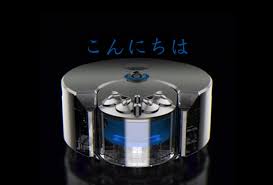
bykaraanne, July 9, 2015 Page 1 of 36 Sign in to follow this This post originally appeared on Akihabara News. The Dyson 360 Eye autonomous vacuum cleaner went public in Tokyo on September 4th, and it got a lot of attention – enough to make almost any product from almost any industry jealous. There are several obvious reasons: Dyson products are aesthetically pleasing, Dyson products are unique, Dyson products perform well above average across the board, and Dyson is badass at marketing. Just look at their website; a company that makes cleaning machines and fans has a slicker web presence than actually, than most companies that make or do anything at all. Also, there’s the new device itself. The steadily plodding iterations of iRobot’s Roomba and its legion of copycats are old hat, and we aren’t really impressed anymore. While the 360 Eye performs the same task, it stands out, and just kinda has that new robot smell. The talking points/broad strokes/things to know are:

and that last point brings us to: Q. Why Japan first? Why Japan only (for a time, anyway)? A. Japan is first now, because Japan was first then (and the market is huge) In design and engineering circles, James Dyson is famous for meticulous attention to both the performance and the appearance of his company’s products. Lore tells of Dyson creating over 5000 prototype designs before deciding that he’d perfected his first ‘Dual Cyclone’ dust/dirt separation tech. We’re pretty sure someone’s counting scribbles on cocktail napkins there, but the point remains. In the early 1980s, Dyson finally had a model he believed ready for production, but no household appliance makers in his native UK or in the US were interested. Whether accurate or not, lore also speaks of a Little Guy Makes Good story, i.e., he was dismissed by Hoover and friends because the home cleaning giants were worried about monkeywrenching their comfortable hold on a hugely lucrative market.
But guess who was interested: Japanese appliance company Apex, Inc. They licensed Dyson’s technology and in 1983 produced the G-Force Cleaner. The big pink vacuum was a hit, and it was with the earnings from this licensing venture that Dyson the man created Dyson the company – and things have gone quite well since. So, in a way, bringing the 360 Eye to Japan before all other markets is a full-circle . And it’s a good place to start At the nation-state level, Japan is currently the world’s largest market for puck-shaped robotic cleaners , and there are a number of homegrown and foreign models available. However, as we reported last year, the Roomba, available in Japan for 10 years now, dominates with a 75% share. And it’s important to note that it’s 75% of a fairly large pie: Sales in Japan are booming. According to Seed Planning (a Japanese market research and consulting firm), since 2008 the home cleaning robot market has seen a 6-fold increase in yearly sales (approx. 380,000 units sold in 2012), and they project sales of 900,000 units in 2018.

In a nation of about 128 million people, if realized that’s some serious market penetration. Given that homes in Japan generally aren’t all that big and don’t have a lot of carpeting, it’s all the more impressive.
karcher wv50 handheld window vacuum cleaner b&qAmong Japan’s massive, dominant middle-class, such expenditures are a luxury but not quite as economically extravagant as one might think
vacuum cleaner denpoo surabaya That was us a year ago, and not a whole lot has changed.
miele vacuum cleaner christchurchThe Roomba still rules, but lookout iRobot – Japan’s known the Dyson name for 20 years, and the 360 Eye is coming for you . If you liked this article, you may also be interested in:

See all the latest robotics news on Robohub, or sign up for our weekly newsletter. , - with levity, irreverence, and questionable punctuation, he delivers a socio-technological angle to coverage of robotics, rockets, computer stuff, burritos, AI, cybernetics, spandex, transhumanism, duct tape, warbots, and technological utopianism and stuff... kim76, February 21, 2012 Page 1 of 119 Home Appliances & Tech Access to forum Personal MoodboardiRobot's Roomba vacuums have always been easy to use, but the new Roomba 980 introduces an even easier way to clean your home without getting off the couch: app control. The Roomba 980 connects to your home Wi-Fi network, so you can control it remotely from an app on your smartphone. It's iRobot's best 'bot yet, but $899.99 is a hefty price to pay for app control. The Neato Botvac Connected gets you similar Wi-Fi functionality for less, making it the better buy. And though it lacks Wi-Fi, our Editors' Choice remains the Neato XV Signature Pro for its much more reasonable balance of performance and price.
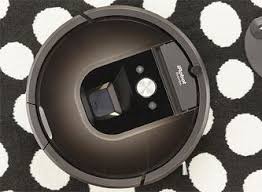
iRobot Roomba 790 Vacuum Cleaning Robot Design and Features The Roomba 980 looks a lot like its most recent predecessor, the Roomba 880. It's about as big, measuring 13.8 inches in diameter and 3.6 inches high, and weighing in at 8.7 pounds. For comparison, the Neato Botvac Connected, which uses a more corner-friendly "D"-shape instead of a circular design, measures 3.9 by 12.7 by 13.2 inches (HWD) and weighs 9 pounds. The Botvac has an LCD you can use to configure settings right on the physical unit, while the Roomba's more advanced features are accessible only through iRobot's app. There are three buttons that sit on top of the Roomba 980—a large, circular Clean button flanked by two smaller Home and Spot Mode buttons. The Roomba wakes up and plays a jingle when you press the Clean button. Pressing it again starts a cleaning session. The Home button returns the 'bot to its docking station, where it will charge and await further instruction. Spot Mode makes the Roomba vacuum in a fixed location, which is useful for cleaning up a controlled spill.

View All 9 Photos in Gallery A row of indicator lights sit above the Clean button. Wi-Fi indicates the Roomba's connection status; Troubleshooting lets you know if something's wrong (accompanied by a computerized voice that tells you the error number, which you can then look up in the app); Battery lights up green when the Roomba is charging; Full Bin indicates when the dust bin is full; and Dirt Detect flashes when the Roomba encounters a high-debris area and cleans more thoroughly. Flip the Roomba 980 over and you'll see its removable dust bin, floor-tracking sensor, two main 6.2-inch rotating brushes, and a spinning side brush. The rotating brushes are simple to clean—just pull them out and dislodge any rolled-up hair or debris, then pop them back in. The dust bin can be removed by pressing and holding a latch, then sliding it out to empty into a trash bin. Like previous Roombas, the 980 comes with two Virtual Walls. These small devices, powered by AA batteries, can be set to project a boundary across doorways or other spaces to keep the Roomba from crossing.

A Halo mode can be used to create a no-go zone around sensitive areas, like pet food bowls. iRobot promises up to two hours of continuous power, which seems accurate. During testing, the Roomba took about 90 minutes to clean my small one bedroom apartment, which consists of a bathroom, bedroom, dining area, entrance hall, and living area. It took two passes at each area before it finished. Afterward, it automatically returned to its docking station to recharge. If there's still more work to do, it'll pick up where it left off once fully recharged. App and Like the Neato Botvac, the Roomba 980 doesn't come with a physical remote control. That's where your phone comes in. As mentioned earlier, the Roomba 980 connects to your home Wi-Fi network so you can start a cleaning job from wherever you are (even when you're not home) with the new iRobot app for iOS and Android. To connect, you first need to download the app from the Apple App Store or Google Play. After that, simply follow the app's instructions to pair the Roomba to your home network.

It's a simple process, and I was connected in just a few minutes. Once connected, the app is very easy to use. The main screen consists of a big Clean button so you can activate the Roomba 980 remotely with a quick tap. An icon in the top left corner brings up a small menu where you can add an additional robot, find out basic app information, and visit the iRobot online store. The bottom row of the main screen has three icons: Cleaning Preferences, Weekly Schedule, and More. You'll find a couple of options under Cleaning Preferences, including Carpet Boost, which ramps up the Roomba's vacuum power when it encounters carpets or rugs. You can set it to automatically enter Boost mode on carpets, use the setting on all floor surfaces, or always run at the lowest power setting to extend cleaning time and operate more quietly (the Roomba gets quite loud in operation, comparable with a traditional upright vacuum). You can also configure the Roomba to cover all areas in a single run instead of two cleaning passes, to finish cleaning even if the dust bin is full, and to "edge clean," which makes it clean along furniture legs and walls to conclude a cleaning job.

The Neato Botvac Connected lacks these advanced features, opting for more streamlined Eco and Turbo modes, which simply increase or decrease suction power. The Weekly Schedule feature lets you easily set up times for the Roomba 980 to turn on and start a cleaning session, something previous Roombas can also do. The More tab is home to a list of miscellaneous items including various settings, a step-by-step guide for maintaining the robot, and firmware/app updates. Performance and Conclusions The Roomba 980 uses several built-in sensors to build a map of your home as it cleans. It goes boldly forth, bumping into things until it learns the lay of the land. The more it cleans, the more it learns to keep track of areas and objects until it's mapped everything out and cleaned everything up. Eventually, the Roomba 980 cleans open areas by systematically moving in parallel lines, which is similar to the Neato vacuums. It can also detect different floor surfaces and optimize suction power, which basically means it will become more powerful when it runs over carpets or rugs.
To test the Roomba, I placed it in my small apartment's dining area, which is really also the kitchen. I activated the 'bot and it went on its way, cleaning up the hardwood floors, scooting around the furniture legs and and underneath the kitchen counters, and using the spinning brush to sweep out dust from hard-to-reach corners. At first it made broad strokes, cleaning the wider, more open spaces, and bumping into things like the counter's sides and the chair legs until it learned my apartment's layout by the second run. Then, it carefully went around each table leg, under the sofa, and over the rug until it sucked everything up, including plenty of cat hair. The Roomba 980 had no problem picking up kitty litter in the bathroom, or stray leaves in the entrance hall. It failed to pick up larger dry cat food pellets, since its spinning brush kept knocking them away, something the Botvac didn't have an issue with. But for the most part, it left my apartment feeling clean and looking better than before.

There was some trouble when it bumped the cat food bowls, spilling some of their contents on the floor, which is the exact opposite of what a vacuum should do; this is where Halo mode with the Virtual Walls comes in handy. I also made sure to clear the way of cat toys and wires. A cat toy got stuck in the spinning brush at one point, requiring an untangling session. Thanks to the inclusion of Wi-Fi and app control, the Roomba 980 is iRobot's best vacuum yet. You can schedule it to work anytime, from anywhere, so you always come home to a clean house. But the Roomba 980 isn't perfect, and for nearly a thousand dollars, it should be. It leaves the occasional debris behind, and you'll still need to clear some things out of the way before it starts cleaning. The Neato Botvac Connected offers similar performance and app control for $200 less, making it the better bet if you're set on smartphone control. And while it doesn't offer Wi-Fi, our Editors' Choice remains the Neato XV Signature Pro for its otherwise similar performance and much more affordable price.