vacuum cleaner caused $400m sub fire in maine

A work crew's vacuum cleaner caused the $400 million fire aboard the nuclear-powered submarine Miami at a Maine shipyard, the Navy has found.According to preliminary findings released today by the Portsmouth Naval Shipyard, the vacuum cleaner was "used to clean worksites at end of shift" and was "stored in an unoccupied space." The specific details of exactly how the vacuum cleaner caught fire, along with a complete damage assessment, will be released "at a later date."The Los Angeles-class attack sub arrived at the shipyard in March for repairs and upgrades. The fire began the evening of May 23 and burned for more than six hours. It damaged the sub's forward compartment, which includes crew quarters, command and control spaces and the torpedo room.The sub's nuclear power plant was shut down in March and was not affected.BLOG: Submarine catches fire at Maine shipyardThe Navy is still deciding whether to fix the sub or scrap it.Beyond the initial $400 million damage estimate, the Navy is also factoring in an additional 10% "for the secondary effects (such as disruption to other planned work across all Naval Shipyards, and the potential need to contract work to the private sector)."

Sen. Susan Collins said she would work to secure funding.Click to watch video Vacuum causes $400M damage to nuclear submarine
sears kenmore vacuum cleaner bag 50403 A fire last month aboard a U.S. nuclear submarine that caused more than $400 million in damage may have been caused by a vacuum cleaner, the Navy said Wednesday.
portotecnica wet dry vacuum cleaner "Preliminary findings indicate the fire started in a vacuum cleaner used to clean work sites at end of shift, and stored in an unoccupied space," the Portsmouth Naval Shipyard Congressional and Public Affairs Office said in a news release.
agait robot vacuum cleaner singapore"Specific details as to the cause and subsequent damage assessment are still being evaluated as part of ongoing investigations and will be released at a later date."

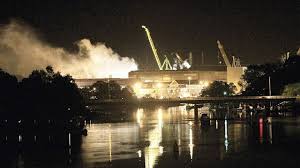
Public Affairs Officer Deb White said she did not know what kind of vacuum cleaner had been implicated in the blaze or whether the same machine was used by any other nuclear submarines. The May 24 incident affected the forward compartment of the USS Miami, where the crew's living quarters, command and control spaces and the torpedo room are, the release said. "Miami's nuclear propulsion spaces were not affected by the fire," the release said. "The ship's nuclear propulsion plant was not operating at the time and the plant had been shut down for over two months. Nuclear propulsion spaces were isolated from the forward compartment fire early and spaces remained habitable, manned and in a safe and stable condition throughout the entire event. There were no torpedoes or other weapons onboard the submarine." Cleanup in the forward compartment began last week and the Navy estimated an "initial rough repair cost" of $400 million, plus some 10% for what it called "secondary effects," including disruption to other planned work in the shipyards and the possible need to contract work to the private sector.
The submarine was commissioned in 1990 and carries a crew of 12 officers and 98 enlisted personnel, according to the Navy.A Portsmouth Naval Shipyard worker has been charged with arson for allegedly starting a $400 million fire aboard a U.S. submarine after suffering an anxiety attack, according to news reports.Casey James Fury, 24, of Portsmouth, N.H., today was charged with two counts of arson for two fires: the May 23 blaze aboard the USS Miami and a smaller fire June 16 under the sub, which had been in dry dock at the Maine shipyard since March for maintenance and upgrades. The vessel's nuclear power plant was not damaged.Agents with the Naval Criminal Investigative Service arrested him Friday. According to court documents filed today, Fury initially denied involvement in both fires but last week admitted to setting them, the Navy Times reports. If convicted, he could face life in prison.According to the criminal complaint filed today, Fury, a civilian painter, had been "needle-gunning" -- removing rust, paint and scale -- in the torpedo room May 23 but became anxious after about 90 minutes.
Navy investigators say he takes medications for anxiety and depression.He left with his cigarettes and Bic lighter and went up to a midlevel stateroom, where he found a vacuum and rags on a bunk. "He set the aforementioned rags on fire with a Bic lighter and after seeing flames approximately two inches high on the rags, he departed the state room, went to the torpedo room and returned to needle-gunning," the complaint said.In early June, the Navy said a preliminary investigation had determined that the fire began in a vacuum cleaner that was "used to clean worksites at end of shift" and that was "stored in an unoccupied space." The Navy said at the time that the specifics of how the vacuum cleaner caught fire would be released in the future.BLOG: Vacuum cleaner caused $400M fire on sub at Maine shipyardThe fire, which damaged the torpedo room and command area inside the forward compartment, took more than 12 hours to extinguish. The Navy still hasn't decided whether it will repair or scrap the Los Angeles-class attack submarine.
The June 16 fire started on a wooden dry dock cradle supporting the sub. The flames were quickly extinguished and caused no damage.According to the seven-page affidavit, Fury told NCIS investigators Wednesday that he had been texting his ex-girlfriend, "attempting to convince her to stop seeing another guy," writes the Navy Times, published by Gannett, USA TODAY's parent."Fury explained that he became anxious over the text conversation with his ex-girlfriend and wanted to leave work," an investigator said in the affidavit.On Thursday, he reportedly admitted to starting the May 23 fire.Fury is being held by the U.S. Marshal Service in Portland, Maine. A fire that caused an estimated $400million in damage to a U.S. Navy nuclear-powered submarine docked in Maine started in a vacuum cleaner used by shipyard workers, officials said today.The fire in the forward compartment - which includes crew living, command and control spaces and the torpedo room - of the USS Miami on May 23 took about 12 hours to extinguish and injured seven firefighters.

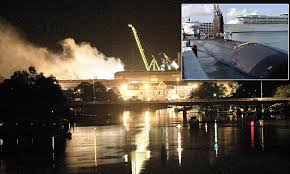
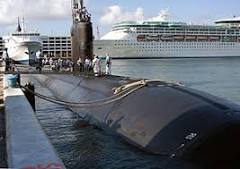
A statement from the Portsmouth Naval Shipyard said the vacuum was used by workers to clean up after each shift and was stored in an unoccupied space when the fire started. Potential cause: A fire in the USS Miami (pictured) that caused an estimated $400million to the U.S. Navy nuclear-powered submarine in Maine started in a vacuum cleaner used by shipyard workers, officials said 'Preliminary findings indicate the fire started in a vacuum cleaner used to clean work sites at end of shift, and stored in an unoccupied space,' the shipyard's public affairs office said in a release.Specific details are still being evaluated. The Navy also confirmed the $400million preliminary estimate for repairs.The Navy estimated that an additional 10 per cent cost — or $40million more — would be needed to account for disruption to other planned work across all naval shipyards and for potential assistance from private sector contractors, the shipyard said. Findings: A statement from the Portsmouth Naval Shipyard said the vacuum was used by workers to clean up after each shift and was stored in an unoccupied space when the fire started on May 23

Initial conclusions reached through a formal Naval safety investigation could be released in the next two weeks.The Miami's nuclear propulsion plant was not operating at the time and had been shut for over two months. The nuclear areas were isolated from the fire early.No torpedoes or other weapons were on board the submarine, which was at the Portsmouth Naval Shipyard in Kittery, Maine, three months into a planned 20 months of maintenance.The fire burned for 10 hours, creating intense heat in forward compartments including the torpedo room, crew quarters, and the command and control centers. The rear part of the submarine including its nuclear propulsion escaped damage. Future: The Navy estimated that the submarine, intact in this 2004 photo, has $400million in damages and an extra 10 per cent cost, or $40million more, would be needed to account for disruption to other planned work The Navy is seeking to determine whether the hull is still sound.'Navy engineers are conducting a full technical assessment including internal and external hull surveys and damage assessments to develop a detailed cost estimate,' the shipyard said.