rodak vacuum cleaner

Vacuum Cleaners & Accessories Home & Car Washer Wet Mops, Squeegees, and Buckets Dust Mops, Dusters, and Cleaning Pads Brooms, Brushes, and Dust Pans Windows & Glass Cleaning Tools paint, wire & wire cup brushes Paper & Cloth Wipes Janitorial Carts and Supply Holders Water Softening & Treatment Best Cleaning Products to Maintain Hygiene Cleanliness comes intrinsically to humans. Clean environments lay down the foundation of healthier, longer and better lives. Thus cleanliness should be maintained in all spheres of our lives – from our homes to offices, schools, colleges, factories and even localities! Working in clean environments not only prevents diseases but also makes us innately more alert and proactive. We should take adequate measures to ensure hygienic work environments and cleaner homes. Buy best home cleaning products online Brooms, brushes and dust pans are perhaps the most basic and indispensable cleaning products.

Amsse sells a wide variety of brooms and sweeping brushes – from plastic brooms to lobby brooms, sweeping brushes, grass brooms and carpet brushes. A plethora of kitchen hygiene products are also available online – namely, detergents to clean utensils, kitchen and chimney cleaners to remove trapped dust and grease from chimneys and disinfectant tablets to clean your water. Wearing clean clothing is also important for staying healthy. brings to you fabric softening liquids, per-oxy oxygen bleaches and activators from Taski. Buy the Bosch Home & Car Washer, the Cumi CCW 90 Car Washer or the Unimeck Po...You are using a web browser we do not support. To improve your experience please try one of the following options:SEM images of the surface morphology of the non-Ar-treated and Ar plasma treated (1, 30, 60 min) shrunk substrates are shown in Figure 1. As expected and observed in Figure 1A–C, the shrunk surface was relatively smooth and flat on the non-Ar-treated shrunk PO film.
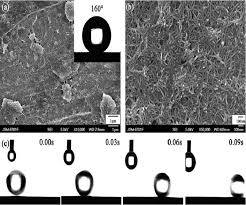
In contrast, when the PO film was Ar-treated for 1 min, multiscale wrinkled features were formed (Figure 1D–F). These multiscale wrinkles were also formed when the PO film was Ar-treated for 30 min (Figure 1G–I) and 60 min (Figure 1J–L). The wrinkle formation was attributed to the stiff skin layer created on the surface of the pre-stressed PO film due to the Ar plasma treatment. During plasma treatment with the inert Ar gas, energized ions from the bulk plasma break C-H or C-C bonds on the surface to create free radicals on the surface of the PO. When the Ar-treated PO is removed from the chamber and exposed to air, the free radicals react with the molecular oxygen to form a stiff oxide layer on the PO surface [31,32]. When the treated substrate was heated past the glass transition temperature to induce shrinking, the stiffness mismatch between the skin and PO film resulted in buckling and hierarchical wrinkled features [33]. A similar process was previously applied and described on pre-stressed polystyrene substrates by Huntington [29,34].

Similarly, Stenberg reported wrinkling due to the stiff skin layer developed by argon plasma treatment on their polystyrene (PS) samples [35]. The zoomed out SEM images in Figure 1D (1 min Ar treatment) and 1G (30 min Ar treatment) reveal that the multiscale wrinkles appear to be of a similar wavelength despite the difference in plasma exposure time.
miele s7 bolero s7580 upright vacuum cleanerFrom buckling theory, it is well understood that the wavelength of the wrinkles is linearly proportional to the skin thickness and to the cube root of the ratio between the elastic modulus of the skin layer and substrate.
airflo 2000w cyclonic bagless vacuum cleaner reviewsThe SEM images reveal that the wavelength of the wrinkles do not appear to change significantly with longer plasma treatments, suggesting that the elastic modulus of the skin thickness and/or film is not altered by variable plasma treatment time.
shark navigator vacuum cleaner w/ infinity cyclone review
Accordingly, Bruce noted that when certain polymers were exposed to Ar plasma, a dehydrogenated amphorous carbon layer formed on the surface, and the thickness remained constant once the initial layer was formed [9]. Interestingly though, the magnified SEM image of 30 min Ar exposure (Figure 1I) reveals small nanoscale features on the wrinkles that are visibly absent in the 1 min Ar exposure sample (Figure 1F). Similar nanoscale features are observed for the 60 min treatment as seen in Figure 1J–L. When comparing the magnified SEM images of the 30 min (Figure 1I) the 60 min (Figure 1L) Ar treatment, the nanoscale roughness appears to be more pronounced with the longer exposure time. Wrinkle wavelength and nanofeature roughness were characterized further by applying 2D FFT to the SEM images. The 2D FFT algorithm was applied to each SEM image in Figure 1D–L, and the resulting plots for each exposure time were graphed together for each length scale. As expected from our previous visual assessment, we observed only one distinct peak for the one-minute treated surface, in contrast to two distinct peaks for surfaces treated at 30 and 60 min. Treatment at 1, 30, and 60 min all produced larger wrinkles ranging from 300 to 600 nm, while the second peak in the distribution for the 30 and 60 min treatment was between 40 to 60 nm.

To develop a better understanding of the nanoscale features observed on the multiscale wrinkles, SEM images of the PO film were captured prior to shrinking on a non-Ar-treated an Ar-treated (30 min) sample, as shown in Figure 2. These images reveal that continuous Ar plasma treatment of the surfaces results in significant etching to the plastic film and yields a highly roughened surface relative to the untreated PO film. This phenomenon has been previously described by Bruce where Ar plasma was used to induce nanoscale roughness on polystyrene films [36]. However, the nanoscale features observed on our shrunk, multiscale wrinkled surfaces were not present on their nanostructured surfaces due to our pronounced shrinking method.In addition to wrinkle wavelength and nanoscale roughness, microscale roughness was also characterized because a combination of nanoscale and microscale features are necessary to achieve superhydrophobicity. The microscale features on the Ar-treated SH samples were observed using a red laser scanning microscrope, as shown in Supplemental Figure S1.

Due to the experimental limitations of our optical imaging system, nanoscale features could not be observed. The microscale roughness measurements collected from the laser scanning microscope were experimentally comparable to the microscale region of the FFT data presented in Figure 1M. Samples treated with Ar for 1, 30, and 60 min result in microscale roughness of 2.2 ± 0.4 µm, 4.4 ± 0.6 µm, and 5.0 ± 0.2 µm, respectively. As plasma treatment increases, the microscale roughness increases, which could be attributed to the effective skin on our shrink film [28]. Under high compression (such as without the PO film), hierarchical wrinkles occur because the amplitude of the smaller, first generation wrinkles saturate and create an effective skin. This effective skin in turn generates an effective generation of wrinkles. Therefore, samples that were Ar plasma treated for 30 and 60 min have a greater microscale roughness because the nanoscale features shown in Figure 2 create an effective skin that affects the wrinkling of the second generation wrinkles.