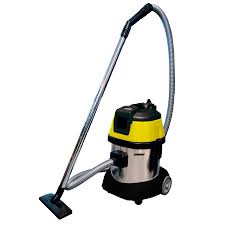
kyowa vacuum cleaner wet and dry
Use keywords, keep it brief(Image credit: Gina Eykemans) When’s the last time you remembered to clean your toaster? Even though most of us use it daily, the toaster probably isn't in the forefront of our cleaning brains. It's time to show this bread-crisping workhorse some love and appreciation, and it's not hard to do; in fact, the whole process only took me about ten minutes! I know my toaster as a hardworking appliance that lives in a lonely corner of the kitchen gathering up a mess of crumbs. If we're honest, I’ll tell you I didn't even realize how dirty my toaster had become until recently. If we’re being really honest I’ll tell you that once I realized it could use a little cleaning attention, I unplugged it and turned it upside down. A large hunk of burnt toast fell out into my sink. A whole chunk of toast. That surely can’t be good. I’ve been a super neglectful toaster owner, it’s true.Here's how I got my toaster looking all shiny and new again, and how you can, too:

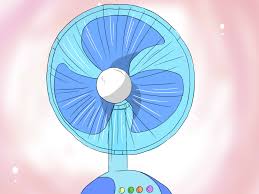
Unplug your oscillating round fan from the wall. Either use a Philips head screwdriver to unscrew the front grille from the back grille; or, push grille clips off front grille, depending on your oscillating round fan, and take it off. Unscrew the blade cap from the blade and take it off. Slide the fan blade off. Unscrew the back grille nut from the back grille and take it off. Slide the back grille off. Use a bottle of liquid hand soap and warm water on each fan part to clean it or run fan parts through a dishwasher. Set each cleaned part on a hand towel and allow about 10 minutes for each fan part to dry. Follow the disassemble instructions given above in reverse to reassemble the fan. Plug your cleaned oscillating round fan in and turn it on. Be careful when dis- or re-assembling your fan If your fan shakes at speed, its blades may be unbalanced. You can balance a blade assembly made of soft plastic in much the same way as a lawnmower blade by balancing it on a spindle such as a nail and spinning it to see if it consistently comes to rest in a particular orientation, which would mean it has a heavy spot.

Use a strong scissors to trim a thin sliver off the outside edge of the heavy blade or two and re-test so that it balances, or nearly balances. Unplug your fan before doing ANY maintenance After you remove the grills - you can go over the grills and blades with a shop vac. This saves time and is a lot faster then trying to hand clean each blade (and or parts) with a soapy rag (and then allowing for drying time). Depending on how dusty the fan is, you may indeed need that soapy rag to polish off particularly stubborn areas. Make sure that you are using a brush attachment with the shop vac. A hand held dust buster will not be strong enough. Don't clean any of the electrical components with your wet rag. The fan blade may have sharp edges; If you cannot do this, DO NOT do it.The manufacture and the sale of the heat exchanger:The heat exchanger to make the hot wind(the cool wind)to use for the dryer(the refrigeratingmachine)The heat exchanger to use for the cooling of circulating gas.
Screen reader users, click here to load entire articleThis page uses JavaScript to progressively load the article content as a user scrolls. Screen reader users, click the load entire article button to bypass dynamically loaded article content. Volume 232, 15 October 2013, Pages 868–875 Antibacterial silver coating on poly(ethylene terephthalate) fabric by using high power impulse magnetron sputtering Received 25 March 2013, Accepted 26 June 2013, Available online 4 July 2013•Successfully prepare antibacterial silver film on PET fabric by using HIPIMS technique.•Silver-coated fabric with excellent durability, even undergone rubbing and washing test.•Silver-coated fabric provides effective antimicrobial properties for E. coli and S. aureus.•After silver coating, PET fabric still retained its mechanical property.Antibacterial silver coatings on textiles, formed by various coating processes, have attracted substantial attention. However, the durability of these coatings in practice is poor, limiting their usage.
The goal of this study is to prepare antibacterial silver films on poly(ethylene terephthalate) (PET) fabrics by high-power impulse magnetron sputtering (HIPIMS), which is known to provide a high plasma density, so as to form a strongly adhered film at a relatively low substrate temperature. These silver-coated textiles are expected to exhibit antibacterial efficacy and durability.The experimental results herein reveal that the silver coating can be successfully deposited on PET fabric by HIPIMS with a crystal structure presenting (111) preferred orientation and that the fibers are uniformly covered. Pre-treatment with oxygen plasma for a single minute can effectively enhance film adhesion in dry and wet rubbing tests, such that the color fastness can be ranked Grade 5 and Grade 4, respectively. The coated fabric retains the mechanical properties of its original bare fabric and the coating procedure does not induce damage to PET fabric. Antimicrobial performance testing indicates that a silver film that is deposited for more than 1 min provides strong bacteriostatic (> 2.0) and bactericidal (> 0) effects, based on the JIS Standard.

Additionally, the coated fabrics retain their antimicrobial capability after 20 cycles of washing, demonstrating their long-term durability.Keywords; ; ; ; 1. IntroductionThe increasing global population and the close contact among people has led to increasing demand for hygienic clothing and activewear, which has formed a considerable market for antimicrobial textile products [1]. Therefore, many treatments and antimicrobial agents for fabrics and textiles have been used. They date to the early sixties, when a method of using antimicrobial neomycin to adhere on cellulosic fiber with a water-soluble copper-containing fixing agent was demonstrated [2]. Antimicrobial fabrics can basically be categorized in two classes – fabric to which is bound an antimicrobial substance and fabrics [3] and [4] that are finished with various antimicrobial reagents via different routes. With respect to the latter, antimicrobial finishing is typically based on wet processes, including the electroless plating of antimicrobial metal [5] and [6], the sonochemical irradiation of nano silver particles [7] and [8], and impregnation with organic/inorganic substances [9] and [10], among others.
As is well known, the antimicrobial treatment of textiles must satisfy many requirements [1]. These include effectiveness against a broad range of bacterial and fungal species, harmlessness to consumers, durability when laundered, the absence of any negative effect to the quality of the textile, compatibility with textile chemical processes, cost-effectiveness and, of particularly importance, the use of no substances that may harm the manufacturer or the environment. The aforementioned wet treatments may satisfy some of these requirements but, unfortunately, the resultant products are fairly poorly when laundered, and the harmful substances that must be used may have a severe environmental impact [11].To meet all of the requirements for the antimicrobial treatment of textiles, in recent years, vacuum coating has been developed. Among these vacuum coating processes, magnetron sputtering has been utilized commercially to deposit antimicrobial metal as it is a well-developed coating technique [12] and [13].

Research and development into such processes are ongoing [14], [15] and [16]. These efforts move a large step toward making textile treatments cleaner. One emerging method of magnetron sputtering involves the effective control of the power delivery to the target by HIPIMS, where a high voltage pulse is generated by the power source and operated at high peak power for a very short period causing a high degree of ionization of the sputtered species, in a manner similar to that associated with an arc source [17] and [18]. This process enables HIPIMS to provide high plasma density, and so to produce a strongly adhering film at a reduced relatively low substrate temperature. With this unique power source, an antimicrobial treatment for the textile using silver as the raw material has been proposed [19]. This aim of this study is to form antibacterial silver-coated PET fabrics by HIPIMS and to examine their antibacterial efficacy and durability against washing and rubbing.2. Experimental2.1. Preparation of silver coating on PET fabricHIPIMS was carried out in a vacuum chamber in which was placed a single rectangular magnetron source with a target area of 11.4 cm × 34.5 cm (effective eroded area of 282 cm2, from which power density was calculated) and the HIPIMS system is shown schematically in Fig. 1.

The HIPIMS power supply was manufactured by Taiwan Power Tech., and comprised a DC-1020A DC power unit and a SPIK 2000A-20 pulsing unit. The target current and voltage were measured using a Tektronix CT-4 high-current probe and a high-power voltage differential probe, respectively; the signals thus obtained were displayed and recorded using a Tektronix TDS 2022B digital oscilloscope.Poly(ethylene terephthalate), known as PET, in the form of a fabric with dimensions 29 cm × 19 cm was used as a substrate. It had a single filament diameter of 39 inch, a density of 170 D and a weight of 273.4 g/m. Before being coated with silver, oxygen plasma treatment was performed to remove surface contamination and activate the surface of the fabric. In this stage, an RF power supply was used for substrate bias, keeping a constant output power of 50 W to generate glow discharge over the substrate, whilst admitting oxygen gas into the coating chamber to control an working pressure at 1.33 Pa for 0 min, 1 min, 3 min and 5 min, respectively.