ives mcgaffey vacuum cleaner
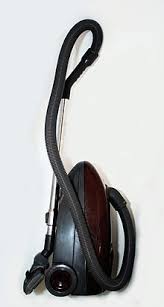
The vacuum cleaner (1868) The march of the vacuum cleaner, and its future, was predicated on the questions all new ventures and new products seek to address: How bad is the customer’s pain? And how much does this new product relieve that pain?Before 1868, before Chicago — before Ives W. McGaffey — “cleaning up” meant sweeping up. The most technological cleaners of the time were carpet sweepers. Hiram H. Herrick of Boston submitted a patent for a carpet sweeper in 1858, but it wasn’t terribly efficient and didn’t catch on.Daniel Hess, an Iowa man, turned in a patent in 1860 for a device with a rolling brush and an elaborate bellows that generated suction. View PDF of McGaffey's patent →McGaffey took further the technology of the time, creating in 1868 something relatively light and compact, but with a tricky hand crank and an eyebrow-raising $25 price tag (who could afford such convenience?). With the help of the American Carpet Cleaning Co. of Boston, McGaffey sold models in Chicago and Boston.

It is thought most were lost in the Chicago Fire of 1871. Two McGaffey vacuums remain. But innovation had marched on. John S. Thurman of St. Louis introduced a gasoline-powered carpet cleaner in 1899 and, across the Atlantic England’s Hubert Cecil Booth in 1901 introduced his “Puffing Billy.” It improved upon Yankee inventors’ ideas, refining them over the decades.One thing true of the vacuum cleaner — as with any consumer product aimed at a common human need — is that a lot of people will try to build one better. And what could be more common than the desire to tidy up a bit? It’s a giant market.Consumers have seen the upside. All that competition drives technological innovation, and that drives down cost.Until the next breakthrough. © 2016, Chicago TribuneThe Changes to Vacuum Cleaners over the last 100 years Vacuum cleaners are one of the more popular inventions in the household applianceThey make cleaning much easier and much more thorough than merely sweeping

or any other form of cleaning that people once used. They can pick up more dirt and dust as well as many messes that get dropped on your floor. were not always as convenient and helpful as we know them to be today. The first technology that led to the development of vacuum cleaners occurred in Chicago in 1868 by Ives W. McGaffey. His first vacuum-related invention was a manually-powered machine that needed to be cranked in order to operate. It was even more inconvenient because the user needed to turn the crank while still pushing the mechanism alongThese models were mainly marketed throughout Chicago and Boston, but much of the inventory burned up in the Chicago fire of 1871. It wasn’t until 1900 when the first electric-powered vacuum cleaner was introduced by Corinne Dufour in Georgia, but there were more improvements to be made. In 1901, H. Cecil Booth introduced the first powered vacuum cleaner model that used the technology of the vacuum tube.

He got the idea for this by placing a white handkerchief on a chair and then placing his mouth over the top of it. He then sucked up with his mouth and realized the amount of dirt that was on the underside of the handkerchief. This gave him the idea for the poweredHis first powered vacuum cleaner was powered by oil, but he later created an electric-powered model.
s1001 vacuum cleanerUnfortunately, it was so large
walmart hoover tempo vacuum cleaner it had to be carried by horse and carriage and it was normally parked outside
sheffield vacuum cleaner with deluxe pet grooming kit of a building while the operator cleaned the inside. The first vacuum cleaner that resembles the popular models that we know today

were created in 1905 by Walter Griffiths. His model, named the “Griffiths Taking You Back In Time Prints Vacuum Apparatus for Removing Dust from Carpets,” was alsoIt was, however, much smaller and portable which made it easier for one person to operate it alone. The mechanism resembled a bellow that would suck dust into a removable pipe. The pipe would then be cleaned for the next use. It also had differently-shaped attachments so people could reach other areas of their home that needed cleaning. The next person to make great strides in the vacuum technology was David T. Kenney. He received nine patents between 1903 and 1913 for his work the vacuum industry. He created the Vacuum Cleaner Manufacturer’s Association in 1919 and many of the new developments had to operate under his patents In 1908, James Spangler was awarded a patent for his vacuum technology that involved a rotating brush coupled with an electric vacuuming apparatus.

sold his idea to the Hoover Harness and Leather Goods Factory, who then made many new improvements and models on the idea. By 1952, they had created the Hoover Constellation – a vacuum cleaner model that hovered above the floorIn fact, some of these models are still found in homes today. It wasn’t until after World War II that vacuum cleaners became commonplace in the American homes. The western culture was more in need of vacuum cleaners because their homes typically had a large area of carpet that needed to beSince the early years, many more exciting improvements have been made. For instance, the Dyson Cyclone was created by James Dyson in 1985. as well as many following models, used no bags. Instead, there was a detachable canister into which the dirt and debris was contained. Clean air is expelled through a series of filters and the canisters can be cleaned when they get full. Lately, there is also a trend in the vacuum industry for robotic vacuum cleaners.