ikleen robot vacuum cleaner reviews
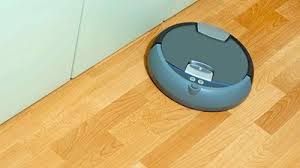
Few cleaning products have sparked as much interest as the robot vacuum. After all, it is the dream of any time-poor person to be able to sit down and relax while an artificially intelligent device cleans the house. Robot vacs have become very popular in the past few years and many people swear by them. Some owners even name their robots or dress them up in custom coverings or teach their pets to ride them. They're pretty easy to use, and the novelty appeal is undeniable – but are they good enough to replace your regular barrel or bag vac? Looking for the best robot vac? We review models from Miele, iRobot, Vorwerk and more in our . Unfortunately, despite sophisticated technology – navigation software, stair detection, cameras to detect dirt – robot vacuum cleaners are still comparatively poor at the most common job of a vacuum cleaner: removing dirt from carpet. They simply can't generate the suction of a standard vacuum. They can leave the carpet looking clean, but below the surface a lot of dirt is left behind – and, over time, that can damage the pile.
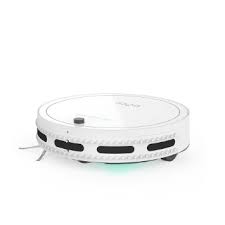
This means that for most homes, we can't recommend any robot vacuum as a replacement for your trusty drag-around model. In our tests, we've found they can pick up a reasonable amount of fluff (such as pet hair) along with some dirt, but also seem to push the remaining dirt even deeper into the carpet pile.
russell hobbs 18376 vacuum cleaner filterMost consumers have no way of measuring the amount of dirt actually in their carpet (which is vacuum performance across all kinds of vacs), so when you see the fluff and dirt in the robot's bin, and the superficially clean carpet, it looks like the robot vacuum cleaner does a much better job than is actually the case.
miele family caretaker lotus white vacuum cleaner review Aha – then your house-cleaning regime might be a bit more future-friendly.
electrolux vacuum cleaner - ele-z2200 (exclusive model)
Most of the models we've tested are very good at cleaning hard floors – albeit not always in the corners and edges – and pet-hair pickup looks to be (slowly) improving, too. For a house with mostly hard floors, most of the tested robot vacuum cleaners will do a reasonable job of keeping the floors clean when run on a daily basis, though a more thorough cleaning with a standard vacuum (or a broom) will still be needed occasionally. In a home with carpeted floors, a robot vac is fine for a purely-cosmetic tidy-up, but the carpet will need a regular going-over with a standard vac to get most of the actual dirt out. This feature, now standard across almost all models, helps the robot sense when it has reached a ledge or step so it can back off and avoid a damaging tumble. An accessory used to create an invisible barrier, for blocking off open doorways or other areas you don't want the robot to enter. This handy function will allow you to set times of the day or week to run the robot - for instance, you could set it to run only while you're away at work.

When the battery charge is low the robot finds its way back to the charger and docks automatically. All the tested models do this. The robots are generally quieter than standard vacs, but some have an annoying high-pitched whistle and others make a mechanical grinding noise. This may be less important if the robot mainly runs while you're out of the house, but these two sounds may be loud enough to annoy neighbours or pets. Most models come with a remote control to direct the vacuum around the room. But the question has to be asked, if you need to be there to direct the robot around the room, would it not be better for you to get up off the couch and clean with a normal vacuum cleaner? The models in our latest test range in price from $130 to $1800. Okay I found a solution for The dumb brush on the stupid Robomaid reviewed on Apr 12, 2016 reviewed on Nov 11, 2015 I love my Robomaid reviewed on Sep 08, 2015 Robomaid where is the company reviewed on Aug 02, 2015
Robomaid stopped working after 5 months reviewed on Jul 01, 2015 Great Product and service in the past - but no longer Robomaid has ceased trading in Australia - worthless warranties reviewed on May 27, 2015 Totally useless and waste of money!!!! reviewed on May 23, 2015 reviewed on May 07, 2015 Absolute Crap machine ,I can't even find anyone to buy it ha!!, posted on May 07, 2015 Oh.....and my screw thing that helped the little spinning brush thing on just kept coming off also,I had to ring and get a new brush and screw still just came out all the time.....total piece of crap the whole Robomaid experience was a disaster .. I can't seem to even sell the rotten thing....hate it!! posted on Jul 06, 2015 1 of 13 pagesDepending on the mode selected, a Virtual Wall® Lighthouse™ (VWLH) can act as both a Lighthouse and a Virtual Wall. Virtual Wall Mode: Completely blocks off areas you don't want your robot to access.

Lighthouse Mode: Acts as a gate, automatically blocking and opening designated areas during cleaning, to allow Roomba to efficiently clean multiple rooms. After the Roomba has completed cleaning each area as designated by a VWLH, the VWLH guides Roomba back to its Home Base®. Maximum cleaning time per room is 25 minutes. For example: Your Roomba and Home Base are located in the family room (Room 1). You also would like your Roomba to clean an adjacent bedroom (Room 2) and office (Room 3). You place a lighthouse in the doorway from Room 1 to Room 2, and an additional lighthouse in the doorway from Room 1 to Room 3, as shown in the following image: When Roomba completes cleaning Room 1, the VWLH opens allowing Roomba to navigate to and clean Room 2. After Roomba completes cleaning Room 2, the VWLH opens, allowing Roomba to navigate to and clean Room 3. After all rooms are cleaned (or when the battery runs low), the VWLH guides Roomba back to its Home Base to recharge.
The following video shows how the robot activates the lighthouse and uses infrared (IR) beams to first block, and then open access to your rooms: How to select Virtual Wall or Lighthouse Mode on your Virtual Wall Lighthouse Mode Selector: Switch on your VWLH to choose between each mode (item 1). Range Selector: Switch to select the size of the doorway or opening you wish to block (item 2). When a compatible robot encounters a Virtual Wall Lighthouse, it pairs with the robot and turns on and off automatically. Each lighthouse runs on two C alkaline batteries. A blinking power light, when the robot is powered off, means the batteries need replacing soon. How to use your VWLH in Lighthouse Mode: Place a VWLH within the doorway of each room you want Roomba to clean. Ensure the iRobot logo is facing forward, and the selector is set to Lighthouse mode. Start the Roomba from its Home Base. Roomba will begin its mission in Room 1 and continue until each room or area designated by a VWLH is cleaned (up to a maximum of 25 minutes per area) or its battery runs low, at which time it will return to the Home Base.
Please avoid placing the VWLH too close to other VWLH, Auto Virtual Walls, or the Home Base. The IR beams from these accessories may interfere which each other and prevent Roomba from completing a successful mission. If possible, orient the lighthouse so that the IR beams point across the area you wish to block without any obstructions. How to use your VWLH in Virtual Wall Mode The VWLH creates an invisible barrier that the Roomba will not cross, as shown in the following image: Place a lighthouse within the doorway of the room you want to Roomba to clean. Ensure the iRobot logo is facing forward, and the selector is set to Virtual Wall Mode. You can use the range selector to adjust the length of this barrier up to 8 ft (2.4 m). Setting a longer range will drain the batteries of the VWLH faster. How does a Virtual Wall® work? Roomba 400, 500, 600, 700, 800 Virtual Wall® Issues Roomba 800 will not return to its Home Base® or runs past Virtual Walls®.