homemaker 2000w vacuum cleaner review

Keep those floors spotless with a brand new vacuum cleaner from Briscoes. Choose from a range of modern, ergonomic vacuum cleaners with the latest technology, from trusted names like Electrolux and Kenwood. Whether you're after a space saving stick vacuum cleaner, traditional bagged vacuum or a bagless vacuum cleaner, we've got you covered. Fast shipping and our price beat guarantee mean that you can buy vacuum cleaner online from Briscoes with confidence. Electrolux AeroPerformer Cylonic ZAP9930 Vacuum NOW Electrolux Equipt ZEQ6520T Vacuum NOW Electrolux Ergorapido Series 4 ZB3104 Vacuum Ice White NOW Electrolux Ergorapido Series 4 ZB3107 Vacuum Dark Bordeaux NOW Electrolux Power Force Animal ZPF2300T Vacuum NOW Electrolux Power Force Dust & Gone ZPF2320T Vacuum NOW Electrolux Silent Performer Cyclonic ZSP4304PP Vacuum NOW Electrolux ZCS2400 Classic Silencer Vacuum Cleaner Red NOW Kenwood HV170 Wet & Dry Hand Vacuum Cleaner NOW Philips FC8056/01 Microfibre replacement pads NOW
Zip Fusion Zip 374 Vacuum Cleaner White/Blue 2000W Bagless NOW Zip Fusion Zip373 Vacuum Cleaner White/Green 2000W Bagless NOW Russell Hobbs RHF209 Bagged Vacuum Cleaner HEPA NOW Zip 415 Elegance 2 in 1 Rechargeable Stick Vacuum Cleaner NOWEfficient use of Air Conditioners... Every extra degree on your reverse cycle air conditioner control, adds 10% to your running costs. In summer, 27 degrees is best but don't go below 25, and in winter, aim for 18 degrees but don't go above 21. Is your Energy Retailer pushing you around? There is something you can do about it! Make a complaint with the SA Energy Industry Ombudsman. You can find their website at Do you have a second fridge, in the shed maybe? If you can do without it most of the time, run it when you need it and turn it off the rest of the time and save around $120 a year in running costs. What you save in power, could pay for the drinks at your next party! The Cost of Cool The Sustainable Energy Authority of Victoria has produced a chart showing the relative costs of the various cooling systems available for the home.
The following chart shows both running cost per hour, and greenhouse gas emission caused by the operation of common cooling systems. Click here to read more. Are you keeping your cool? Without seals in good condition, your fridge will be chewing through a lot more power than it needs to, cooling down all the warm air that leaks in. Close your fridge door on a $5 or $10 dollar note, and see how much effort it takes to pull it out with the door closed. If it slips out very easily, or worse yet, falls out by itself, then your door seals need attention. You should easily recoup the cost of repairs from your energy savings! Hot Water Cost Savings If you reduce the thermostat setting on your storage hot water service from 70 deg C to 60 deg C, you can reduce the standing losses in the system by up to 33%. Your Fridge is one of the biggest energy consumers in the average household. If it's not running in peak condition, it can be costing you a lot more than you think.

When you clean the kitchen, open the fridge and clean the seals around the door with a damp sponge. This will help deter the mildew that can cause premature failure of the door seals. Without good seals, warm air leaks into the fridge boosting your running cost! Figures from the South Australian Department for Transport Energy and Infrastructure show that if a 100w standard light bulb is replaced with a 20w Compact Flurescent bulb, over its seven year life it will save the householder more than $150 in total costs. Now with the advent of LED lightbulbs - the savings can be even greater! With every salesman shouting the merits of radiant, or convection, or ceramic, or what ever other kind of heater they have to sell, it can be a nightmare trying to figure out which is the best to use, and the cheapest to run. However, if it has a power plug - working out the comparative running costs is easy... Gravity fed Hot Water? If your Hot Water service is a gravity fed unit in your roof space, your can reduce the thermal losses by placing a sheet of insulation material (eg. a pink bat) on top of the unit!
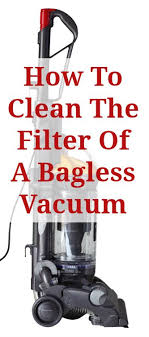
Give wasted power the Brush-off When your fridge pulls the heat out of your food and drinks, it has to put it somewhere. It goes out through the radiator on the back of the fridge, or at least it tries to... Most fridges radiators are covered with insulating dust and fluff! Gently use your vacuum cleaner's brush on the rear of your fridge once a year. Your fridge will reward you with better efficiency if you do! Every electrical appliance sold in Australia - including all electric heaters - must by law have a compliance plate. One of the pieces of information that must be on that plate (often a metallic sticker, or molded into the body of the appliance), is how much power the appliance uses. This will be recorded in either watts (W) or amps (A). In both cases, the smaller the number, the less power the heater will use. It doesn't matter one little bit what kind of heater it is, the power rating tells you what it will cost to run while it is cycled on. (Some heaters have a built in temperature control that turns the heater off for part of the time.)

While on, a 2000W ceramic heater costs exactly the same to run as a 2000W radiator, or a 2000W fan heater, or a 2000W laser beam! If you are comparing two heaters, and one is in watts while the other is in amps, simply multiply the amps reading by 240, and the result will be the watts rating of that heater. (Similarly, if you divide the watts rating by 240, that will be the amps rating.) Now that covers running cost while they are on, but that isn't the same thing as efficiency. Just as important as the running cost, is that you have the right kind of heater for the place you want to use it in, and the time you will be wanting to use it. "Convection" heaters are good at warming up air, but not very good at warming up objects. (Objects get 2nd hand heat from the air rather than the heater.) Since they have to heat the air before they can heat you, they are best used in places where heat will be required for long periods of time at a stretch. Also, they are only really a smart choice where you can contain the heat that they create in the air - so lack of insulation in the roof and walls, or significant drafts make a convection heater next to useless.

"Radiant" heaters are far better at warming up objects than they are at warming up the air. (The air gets 2nd hand heat from the objects rather than from the heater.) Whatever sits in front of a radiator will get warm almost immediately, irrespective of what insulation or draft may be present. That means radiators are the best choice for outdoor areas or rooms without insulation, or places where you will only be for a short time (so long as you turn the radiator off when you leave). A myth I constantly fight against is the idea that leaving a radiator on will heat up a room. The radiator might heat up an empty chair. With luck the empty chair might give enough of it's 2nd hand heat to the air to make a difference before it spontaneously bursts into flames and burns the room down. Even if it doesn't burst into flames, it is just about the least efficient possible way to heat a room. Just don't do it! "Conductive" heaters are the most efficient of the lot, but the least practical in terms of room heating.
Conductive heaters heat only those things that they touch. The most common example, would be the humble electric blanket. Just about the lowest power consumption (and hence running cost) possible, and it keeps you nice and warm without wasting any heat anywhere else. Just not great at Dinner Parties! Finally, you need to take account of how much energy is required to actually heat the space you want to heat. This is where things get quite complicated, and for a precise calculation, you would be best off seeing a professional. Many air conditioning companies offer this kind of calculation as part of their sales technique, and often energy suppliers or even government regulators can point you in the right direction. Often, you can make physical changes to the area you are looking to heat that will reduce the amount of energy required to do the job. Things like changing the curtains, installing insulation, blocking draft entry points, and even what you plant outside the windows can all make a difference.