freetime whiskers robot vacuum cleaner reviews

Freetime R8801 Robot Vacuum Cleaner, 200 ml, 0.2 L Product Dimensions27 x 26.5 x 8.5 cm Special FeaturesCharging Station, Hardfloor Brush, Self Propelled 626,831 in Kitchen & Home (See top 100) Date First Available20 Feb. 2012 Free time robot vacuum cleaner with easy to use due to automated cleaning pattern. Edge cleaning brushes help clean the whole room, its ideal for hard floor cleaning. Step avoidance sensors protect the robot against falling off stairs and it's low profile design allows the machine to clean under furniture. Robomop Robot Floor Cleaner Floor Sweeper As I have laminate flooors and tiled floors throughout, it is a great help, I have a black lab assistance dog, being a wheelchair user, I put it down take Sasha out for a walk and come back and the floor is clear of dust and dog hairs. Empty it and put it back on charge and do the next room, it is so easy, my floors have never been so clear of black dog hairs. Plus no complaining from my husband about the dog's hairs!
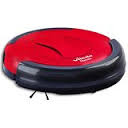
Not suitable for carpets.Jean and SashaFreetime Robot Vacuum Cleaner Bought as a novelty gift - brother loves it.
electrolux ultrasilencer vacuum cleaner - zus3950pWe were told all about it as though it was their new pet!!
kantong debu vacuum cleaner electrolux it was a burthday present and she loves it
black & decker vacuum cleaner nw4860n Great at picking up animal hair and little bits. Fell down the stairs (once) and gets caught on the edges of my rugs so can't leave it on when I'm out. Bought for my mother as a birthday present, absaloutly loves it does the job, only thing is it takes a while to charge but knew that when purchasing I use it in the kitchen and living rom where we have hard floors and two kids leaving lots of crumbs.

great at picking up in these small spaces. plus it is a robot... so... Used to have my hoover out every day as I have a Border Collie that sheds hair and mud constantly...this gadget has transformed my life, however it terrifies the dog! Anyone with hard floors and pets should have one of these. I have two now. Great for picking up dog hair and small dirt particles.bObsweep Standard or Pet-Hair Robotic Vacuum and Mop from $219.99–$239.99 Uses Maven to build (tests are currently broken and need fixing).It’s BMJ week (again) on NCBI ROFL! After the success of our first BMJ week, we decided to devote another week to fun articles from holiday issues of the British Medical Journal. “Tinea imbricata, a superficial fungal infection of man, has an ornate appearance composed of concentric circles and polycyclic or serpiginous scaly plaques. The condition is common in several humid tropical regions, especially in parts of Polynesia and Melanesia. It is also reported occasionally in the Amazon basin and other tropical areas in both hemispheres.

The precise distribution of tinea imbricata, however, has been poorly defined ever since the disease was named by Sir Patrick Manson, the father of tropical medicine. I report the possible presence of tinea imbricata outside its previously known geographic and taxonomic distribution. Several Gungan inhabitants of Naboo, a planet of the Galactic Republic depicted in Star Wars Episode 1: The Phantom Menace, have skin with the distinctive annular and polycyclic pattern of tinea imbricata. Jar Jar Binks, a Gungan who figures prominently in this movie, shows this eruption in figure 2. Manson wrote of the infection, “Again, tinea imbricata, if it has been in existence any length of time, involves a very large surface, as an entire limb, or side of the trunk, or oftener still, if not checked, nearly the whole surface of the body . . . As advancing rings spread, their regularity is modified by the shape of the parts, the nature of the skin they travel over, and by encountering other systems of rings.”

My diagnosis of tinea imbricata is clinical, based on the appearance of the Gungans’ diseased skin. Without scrapings, I was unable to confirm the diagnosis by culture or microscopy. Although we know little about diseases of extraterrestrial creatures (ETs), indirect evidence suggests that Gungan skin is composed of keratin, that they are susceptible to human diseases, and that they have had contact with human populations who have tinea imbricata….There is scant information on the transmission of human diseases to ETs. A Medline search for extraterrestrial dermatophytoses (search criteria [exobiology or extraterrestrial environments] and [skin diseases or mycoses]) retrieved no citations. Elsewhere the science literature describes ETs who are susceptible to diseases caused by earthly pathogens. Martians, for example, suffered fatal infections from mundane microbes both on Earth and on Mars. A century ago, a Martian invasion force was brought to a standstill in London, not because of a strike of transportation workers, but because the Martians were “slain by the putrefactive and disease bacteria against which their systems were unprepared.”

Later much of Mars’s population was decimated by the varicella zoster virus, which caused “chicken pox, a child’s disease, a disease that doesn’t even kill children on earth.” If earthly bacteria and viruses can infect ETs, then perhaps so can fungi.” Read the full article here. Thanks to Marzena for today’s ROFL! Discoblog: NCBI ROFL: Parachute use to prevent death and major trauma related to gravitational challenge. Discoblog: NCBI ROFL: Did Gollum have schizophrenia or multiple personality disorder? Discoblog: NCBI ROFL: The case of the disappearing teaspoons. WTF is NCBI ROFL? The SATs might have made you hate analogy problems, but this one sure is tasty. That clangy thing taking up space in the bottom of your Guinness or Tetley’s can might soon be done away with and replaced by a coffee filter. The ball inside the Guinness can, called a widget, contains a pocket of nitrogen gas held under pressure. When some lucky person opens the can, the pressure is released and the gas shoots out into the beer through a small hole and creates the foam.

You may now be thinking, Wait a minute—most beers seem to have plenty of gas bubbles even without some fancy widget. The thing is that Guinness and similar brews need the widget because nitrogen bubbles are smaller than those filled with carbon dioxide, the bubbling gas in other fizzy drinks. The small nitrogen bubbles make Guinness’ foam deliciously thick and creamy, but it’s harder to get the gas to come out of solution. The widget forces lots of excess nitrogen into the beer, setting off a well-timed bubble eruption. But the widget is not the only way to send nitrogen bubbles cascading upward. In normal beers, carbon dioxide readily forms into bubbles on tiny plant fibers floating around in the tasty, tasty beer, remnants from its agricultural upbringing. This is the same reaction, called nucleation, that produces the Diet Coke and Mentos fountain effect that rocketed to YouTube popularity a few years ago. This combination is reactive because Mentos have a craggy, nook-and-cranny-like surface that provides abundant nucleation points for carbon dioxide.

New research by a team in Ireland (no way!) has discovered a method to harness this same effect to pull even stubborn nitrogen out of solution: just include more of the fibers. The right number of bubbles could be made by a postage-stamp sized piece of coffee filter paper on the inside of the can, The Physics Arxiv blog says: “A single fibre produces one bubble every 1.28 seconds,” they say. That doesn’t sound like enough to make any difference to a can of stout, which requires some 10^8 bubbles to form a head. But if a drink takes 30 seconds to pour, Lee and co calculate that this would require 4.3×10^6 fibres, about as many as you get in a sheet of coffee filter paper about 3cm square.“This is also a matter of national pride. Stout beers are as culturally important to Ireland as champagne is to France.” Discoblog: Honoring St. Patrick: Guinness Bubbles Demystified and Why Your Hangover Hurts Discoblog: A Scientific Defense of Beer Discoblog: My, This Beer Has Some Delicious Proteins