dyson robotic vacuum cleaner dc06
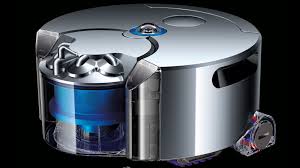
September 4, 2014 11:09 am DownloadDyson launches its first robotic vacuum cleaner You have viewed your allowance of free articles. If you wish to view more, click the button below.The Tesla of vacuum cleaners launches its creations in Japan because Japanese consumers get excited about household robotics, Dyson CEO Max Conze said. Attention vacuum connoisseurs: Dyson is bringing its robotic vacuum, the 360 Eye, to the U.S. by next summer, testing how ready Americans are to give up their old vacuum cleaners. The 360 Eye already debuted in Dyson’s flagship stores in Japan last month. The Tesla of vacuum cleaners – high-tech and expensive – launches its creations in Japan because Japanese consumers get excited about household robotics, Dyson CEO Max Conze said. “You’ve got to have a mission in life,” Mr. Conze says. Apparently Americans are less excited about household robotics than the Japanese. Robotic devices are slowly taking over some household chores, from window cleaning to lawn mowing.
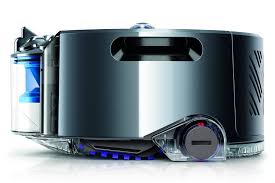
But for vacuums, Dyson and others have struggled to convince consumers that a clunky upright machine isn’t the best tool for the job. The Eye 360 resembles iRobot’s Roomba, which launched in 2002 and became the first robot many people considered bringing into the home. Yet even the Roomba is still a niche product. Dyson’s last effort to bring a robotic vacuum with intelligent navigation to market didn’t get out of the starting gate. A decade ago the company announced the DC06, but the model never went on sale because Dyson struggled to bring down the cost and weight. But this time Mr. Conze says it is for real. The 360 Eye is equipped with tank treads to give it traction, cameras to help it navigate, a lithium-ion battery and one of Dyson’s digital vacuum motors. In Japan, the 360 Eye sells for $1,200; the company has not yet determined what it will charge in the U.S. when it launches in the spring or summer, Mr. Conze says. Although the V6 Absolute cordless model is popular in Japan, the company’s challenge has been convincing Americans they can ditch their upright models for a svelte sucker that hangs on the wall.

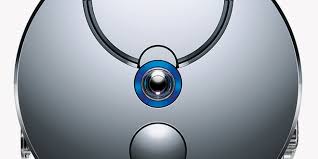
To begin its cleaning tour of a room, the 360 Eye takes a picture of its base station, and then moves to where it approximates is the center of the room. As it putters forward, it takes 30 frames a second from the 360-degree camera, creating a map of the room. It then moves outward in a spiral. If cats like to ride the 360 Eye the way they ride the Roomba, they may get quite dizzy.
electrolux ultra active motorised vacuum cleaner review It doesn’t hurt that the robotic cleaner is cute.
blokker window vacuum cleaner“It is quite emotive I think, it almost has a nose,” Mr. Conze said.
pullman as5 commercial vacuum cleaner Dyson also created a cordless vacuum, the V6 Absolute.
Although the cordless model is popular in Japan, the company’s challenge has been convincing Americans they can ditch their upright models for a svelte sucker that hangs on the wall. “It looks like a light saber. They don’t realize it has the same suckage as the upright vacuum,” Mr. Conze says. Though technically its suckage isn’t quite as strong – 100 air watts for the V6 Absolute, compared with 128 air watts for the company’s current upright models.June 3, 2004 - The long awaited days when robots do the household chores are considerably closer with the arrival of the Dyson DC06; an autonomous robotic vacuum cleaner that will clean all floor surfaces at the push of a button. Capable of 'learning' the layout of a room without and navigating safely around unforseen obstacles, the DC06 is 5% vacuum cleaner and 95% robotic intelligence.The long awaited days when robots do the household chores are considerably closer with the arrival of the Dyson DCO6; bining over 70 sensory devices and three on-board computers with independent wheel, microprocessor-driven SR electrical motors, the DC06 can make 10 decisions every second, enabling it to manoeuvre precisely and clean efficiently without repetition, even recognising when the job is done.
The SR motors produce no harmful carbon emissions and are billed as lasting twice as long as conventional motors with brushes. The completely independent DC06 also charges its own batteries via a high-speed charger, and to thoroughly convince you of its intelligence, there's even a mood indicator light - blue for happy, green when negotiating an obstacle and red if it feels threatened by its environment.The vacuum mechanism itself utilises Dyson's Dual Cyclone technology, a system that - apart from making its inventor James Dyson one of the richest men in the UK - requires no bag and therefore removes dust from the airflow more effectively, maintaining 100% suction. Five years and 5,000 prototypes in the making, the bag-less system extracts particles of dust by utilising centrifugal forces created when the air is driven through two cone shaped cylinders at speeds equal or greater to that of sound, forcing the tiniest of particles onto the outer wall.The DC06 should be available in Australia at the end of the year, and is expected to cost around $6000.
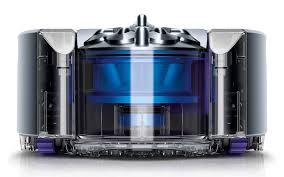
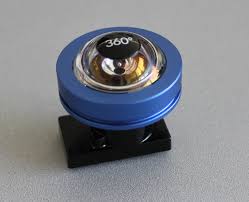
After 16 years of tinkering and experimentation, Dyson is releasing its first robotic vacuum cleaner, the Dyson 360 Eye. Though iRobot released Roomba, the first autonomous sucking machine, in 2002, Dyson has been content to lay back, in hopes of ironing out some nagging limitations. “We didn’t want to put out a gimmick,” Sir James tells WIRED. He says that meant inventing a new way for the vacuum to navigate. “Accurate navigation is the key to cleaning properly,” says Dyson. “I don’t just mean in coverage, but in terms of not going over the same spot twice, because if you do that you’re wasting the battery’s power.” Put differently: Dyson didn’t want to release just any robotic vacuum cleaner. He wanted one that could do the chore as well as its human counterparts. The Eye hinges on a 360-degree camera that views the room at a 45 degree angle and takes 30 pictures per second. Those photos become a live map of the room. To get started, the Eye undocks itself from a charging station affixed to the wall, near the floor.

The robot triangulates its position in the room, finds the center, and starts spiraling outward. Once it has vacuumed 10 square feet, it relocates to clean a new patch. Infrared sensors keep the Eye aware of pets or thin table legs, but the bulk of the vacuum’s spatial smarts come from the real-time map of the room. “When you go into a room, you see there’s a corner of the table you might bump into and you know roughly how far away you are, and you can judge from it,” says Dyson. “I’m talking about the decisions you make from what you see and what you’re able to gauge. That’s precisely what our robot does with its 360-degree camera.” Once it’s covered the entire floor, it scoots back into its charging dock. Novel as the optical mapping system may be, the vacuum still needs serious suction to be truly autonomous. “We always believed we should clean properly, and cleaning properly means you’ve got to put a lot of power and brush suction,” Dyson says. Like other recent Dyson releases, the Eye has one of the company’s proprietary digital motors—this one is a V2 that whirs at 104,000 RPM—that Dyson estimates has 20 times the force of other robot vacuums.
In place of standard wheels the Eye uses treads, so the Eye can climb over ledges or door frames, sucking dust out of cracks and crevices along the way. And unlike other scuttling vacuum cleaners, the Eye’s brush bar is as wide as the body of the robot, so that everything in its path gets a full sweep. Enthusiasts might remember the Dyson DC06, which almost launched in 2001. It had 84 sensors, needed three computers to run, and would have cost thousands of dollars. Its technique was similar to other now-popular robot vacuum cleaners that use random bounce navigation (a system of sensors and bumpers) and maps of the ceiling to make their way around a room, but do so without accurate knowledge of nearby obstacles or a memory of where they’ve been. Dyson reportedly pulled it from production because of its heavy machinery and price tag. Simply put, “we realized that a robot that relied on a lot of sensors would still not be very good,” he says. In the years since, the company has worked on building a better alternative.