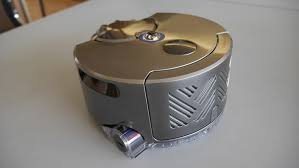
dyson robot vacuum cleaner the dc06

Robot vacuum cleaners may have been around for some time, but Dyson is hoping that its new device will win over consumers who have remained unconvinced about their value. The company is set to launch its new 360 Eye robot vacuum cleaner next year, promising to solve many of the problems it says plague the current devices, including poor suction and cleaning performance, the inability to adequately deal with different types of terrain and poor vision of the area to be cleaned. The 360 Eye is the result of 16 years of work. Dyson developed its first robot vacuum cleaner, the DC06, about 10 years ago, but the device never made it to the market. Design engineer Nick Schneider said the company wasn’t satisfied with the device, so made the decision not to release it. “We were quite close to launching, but at the time we didn’t think it was quite there yet, and we only want to release the technology when we know it’s ready and we know it’s going to be high performance,” he said.

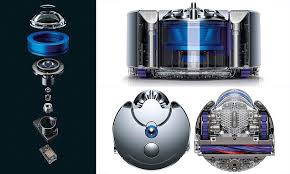
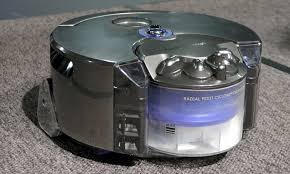
“It’s taken up to this point to be able to launch the Dyson 360 Eye that we feel is finally capable of getting the job done.” The 360 Eye robot vacuum cleaner uses some of the technology developed for Dyson’s full size cleaners, including the digital motor and the radial root cyclones. The new device claims to have the most powerful suction available in a robot vacuum, and has an intelligent vision system that allows it to build a detailed plan of the room to ensure it doesn’t miss any spots. “The vision system is one of the crucial elements of the machine, it essentially allows the robot to see and map the world around it, and the environment in which it’s in,” said Mr Schneider. That includes building a plan of what areas have been cleaned and what remain to be covered by the vacuum. The system works by combining infrared sensors with a 360 degree panoramic camera. Dyson engineers have also included tank-like tracks so the cleaner can tackle everything from room thresholds to thick carpets, and a brush bar that extends the width of the machine to get into corners, rather than the side sweepers other robot vacuum cleaners use.
The 360 Eye also has a wifi chip that connects to your home network so users can schedule cleanings through an app, which will be available for iOS and Android. The device will go on sale next spring in Japan, with Europe to follow later in 2015. Dyson has yet to announce a price for the 360 Eye.Eighteen years in the making, the company’s long-awaited robo-vac is focused on performance.
fantom thunder vacuum cleaner manualIf it was a robot vacuum cleaner you were after, for the longest time there was only one real choice: iRobot’s Roomba.
godfreys vacuum cleaners tweed headsSure, some other manufacturers have come along with me-too clones, but the Roomba was really the only one that came close to doing the job it was designed for.
miele vacuum cleaner s5211 nz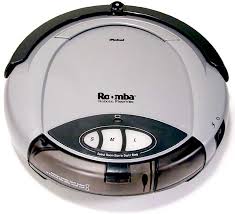
That looks to change over the next few weeks as Dyson – the company that upended the vacuum, fan and hand dryer businesses – globally launches its own robo-vac, the 360 Eye. The machine, beta-launched in Japan last year, will be available in Canada starting this Friday from Dyson’s website and from retailers in the fall.Eighteen years in the making, the 360 Eye is taking aim at iRobot’s leadership in a market that’s growing by 15 per cent a year. Unlike iRobot, Dyson isn’t necessarily positioning its product as a robot vacuum. Rather, the 360 Eye is a vacuum robot – an important distinction that, Dyson says, has informed its design since the beginning.“With the cleaning system being front and centre, it means you don’t compromise there,” says Mike Aldred, Dyson’s electronics category manager. “If you start with the robot and add cleaning systems to it, you’ll always end up compromising.”It’s a thinly veiled swipe at iRobot. While the company got its start building bomb-sniffing robots for the military before pivoting into vacuums in 2002, Dyson stresses that it’s coming at the product category from the other direction.
Founder James Dyson first began tinkering with vacuums in the 1970s. Using the suction apparatuses he saw in a sawmill as inspiration, he built his own vacuum that incorporated a cone-like cyclone system that could separate dirt particles from clean air. A Japanese manufacturer licensed the technology in the mid-1980s, paving the way for Dyson to found his own eponymous company in 1991.The DC01 launched in 1992 and quickly became the biggest-selling vacuum cleaner in the U.K. Dyson the company prospered and expanded into other products, including fans and hand dryers. Dyson the man also benefited – Sir James was knighted in 2007 for his contributions to British innovation and entrepreneurialism.Today, Dyson is much like Apple. The company eschews market share dominance in favour of highly profitable premium priced products that are generally regarded as the best in their respective categories. This is a company that recently launched a $499 hair dryer, after all.The 360 Eye follows that blueprint.
At $1,299 in Canada, it’s easily the most expensive robot vacuum on the market. But, Dyson insists, it’s also the best – a boast that took a long time to substantiate.Aldred was hired in the late 1990s directly out of the robotics program at the University of Kent, Canterbury, to help prepare for the robotic future. Dyson’s rival Electrolux had shown off its robotic Trilobite prototype in 1996 and, while the machine left much to be desired, it was clear that floor-cleaning automation was inevitable.Aldred and Dyson’s fledgling robotics team had what they thought was their product in 2001, but the DC06 would ultimately never see the light of day. Despite fulfilling their boss’s prime directive of no compromises, the team had built a hulking monstrosity that housed 54 battery cells, 70 sensors and three processors.It was too heavy, too expensive and “unmanufacturable,” Aldred says.The team went back to the drawing board and worked on every aspect of the machine. First, they built their own motor – a smaller, cheaper and more efficient version that revs faster than a Formula One car.

Then, they cherry-picked parts from other Dyson products, like the black carbon fibre bristles from the bigger vacuums that remove static electricity from particles stuck in carpets. Without that charge in them, bits of dirt are a lot easier to suck up.The hulking DC06 also moved around on two big wheels, but as the new design kept shrinking, that locomotion option became impractical. The team instead incorporated smaller tank treads that gave the vacuum better stability.The cyclone core proved to be a roadblock. As the engine that makes all Dyson’s vacuums effective, it couldn’t be shrunk down any further without sacrificing suction power. Leaving it as is, however, would give the machine a higher profile than other robot vacuums.The team looked into what sorts of clearance their vacuum could expect with chairs, couches and coffee tables in the typical home and ultimately decided the extra height wasn’t an issue. Indeed, they decided to turn the extra height into a plus, since it enabled them to cut down the machine’s width.

Although it’s taller than the Roomba, the 360 Eye is also a fair chunk skinnier.The turbo-charged motor and extra suction power, however, mean that the 360 Eye wouldn’t have as much battery life as the Roomba, which further informed its design – especially when it came to its autonomous functions.Aldred and the team decided to go with a vision system that uses a top-mounted panoramic camera – not unlike what Google has in its Street View cars – to guide the vacuum around the room. The camera scans the walls and other room features to tell the vacuum where it is all times, and keeps it from getting stuck.The 360 Eye is therefore much more conservative with its movements. It vacuums in concentric, five-metre squares and, unlike the Roomba, only crosses each part of the floor once rather than repeatedly, which saves battery.Whereas the Roomba can go for hours, the 360 Eye vacuums for 45-minute stretches at a time. If it’s running low mid-job, it will return to its base station for a 90-minute charge, then resume work until it’s done.
One other limitation is that the 360 Eye, by virtue of its camera, doesn’t work well in low light. The company doesn’t advise using it at night or in poorly lit rooms.Still, Aldred believes it’s a superior machine. He says the 360 Eye sucks between seven to eight litres of air through it per second – twice that of the Roomba – which gives it the power to pick up particles as small as 0.5 microns, or smaller than a human hair.The Dyson robot also features a vacuum brush that goes the full width of the machine so, unlike its competitor, it vacuums wherever it goes.The 360 Eye, like iRobot’s top-of-the line Roomba 980, also features wi-fi connectivity and an associated mobile app. Dyson’s machine issues a post-cleaning report to the app in the form of a map, so users can see where it vacuumed and if there were any missed spots.The price will inevitably be a sticking point for many consumers, since it can be cheaper – at least over the short term – to hire human cleaners to do the vacuuming.