dyson dc39 animal barrel vacuum cleaner - red

Store and carry the machine The only turbine tool that doesn't tangle. Counter-rotating heads with brushes remove hair from carpets and upholstery.The Dyson DC39 Animal (MSRP $499) is a canister vacuum that wears a big hat, but has little cattle. This model is equipped with Radial Root Cyclone technology, which Dyson claims will pick up microscopic particles. That's great, but if you value design and ease of use, this is a vacuum for you. It's power and cleaning ability lag behind other machines in the price range, but it looks stunning. The Animal is also the first in the company's canister lineup to feature Dyson's iconic ball. Like other Dyson vacuums, this ball allows the DC39 to take corners with ease. Theoretically, this should translate to an excellent vacuum. What we got instead was a slickly designed machine that performs especially well with pet hair, but does a mediocre job with other types of detritus. Still, if you can find the DC39 on sale, it might be worth checking out.
Dyson designed, reviewer approved You can gather the amount of engineering that went into the DC39's accessories just by looking at them. The main cleaning tool is called the Triggerhead. It's an turbine-powered brush head that can be controlled from the handle. That means you can switch from carpet to bare floors without tapping any pedals or bending over. The DC39 also comes with the standard dusting and crevice tool. They perform much like their counterparts on other vacuums, only they're more compact. The only other accessory of note, the Tangle-Free Turbine tool, is a standard on Dyson vacuums. The "tangle-free" distinction comes from two counter-spinning rotors, which (Dyson claims) won't clog with hair. This Animal is on a tight leash Thanks to the iconic ball, the DC39 does roll around with ease. Even though the canister weighs over 16 pounds, it follows you with just a little tug. The ball also lets you glide over normal and bare floors easily, but this low-profile design makes it difficult for the canister to traverse high-pile carpet.

When you're done with the floor, it's easy to clean the sofa or the curtains.
zmart home vacuum cleanerAttachments click off with a single button and the Tangle-Free Turbine tool works on multiple surfaces.
philips handheld vacuum cleaner fc6148After cleaning the top of the couch, the DC39 can slip under it too.
eureka bagless maxima upright vacuum cleaner yellowWe found that anything with a 4-inch gap between the floor and the furniture will allow the Animal complete reach underneath. The fact that the Dyson DC39 Animal is so easy to use might encourage you take it out of your closet more often. And that's half the battle, isn't it? Dyson Cinetic Big Ball (2016) Does not perform up to its price

The cleaning performance of the DC39 lags behind its price. When you spend more than $400 on a vacuum, you should expect an Animal of the highest pedigree. But for the same price, you could get two Kenmore 21814s. Radial Root Cyclone technology or not, the DC39 had trouble picking up the dirt mixture we left out for it. On normal carpet, it picked up just 48% of the dirt. When we switched to high-pile, the percentage nose-dove down to 1%. These numbers aren't really passable, but the DC39 makes up for it with pet hair removal skills. No matter what surface it was on, cat hair couldn't hide from the Animal. The Tangle-Free Turbine stayed true to its name—hair didn't clog the hose at any point during our tests. However, if you don't have a pet that sheds everywhere, this sole advantage of the Animal becomes moot. The DC39 isn't bad, but if you prioritize cleaning power over handling, this might not be the vacuum for you. The Dyson DC39 Animal handles well and looks sleek.

For some people, that's important. If your vacuum's controls dissuade you from cleaning, that's almost as bad as having no vacuum at all. The maneuverability and the ease of attaching different tools make this Dyson a pleasure to use. On the other hand, a vacuum should get dirt out of your house. In that regard, the Animal doesn't live up to its price tag. The street prices hover around $300-400 and for that you get below-average performance on normal and high-pile carpet. This Dyson does redeem itself with the ability to easily remove cat hair, but that's not enough to make up for other detriments. If you want a canister vacuum that has a really tight design, this is one such model. However, we can only recommend the Dyson DC39 Animal to the general public if you find it at a steep discount, which doesn't happen too often. Otherwise, you'll be disappointed by its relatively weak cleaning performance. As is usual with Dyson vacuums, the Dyson DC39 ($499.99 MSRP) has a lot to live up to given its price tag.

The DC39 has garnered attention due to its new "Radial Root Cyclone" technology, which Dyson says makes the vacuum more likely to pick up microscopic dirt particles. It's also the first Dyson canister model to include its famous ball design and the company claims this gives the machine a lower center of gravity and greater user control. So, how does this translate to real cleaning performance and usability? We found that the results were mixed. For a compact canister, the the Dyson DC39 was great on hardwood and pretty good on short carpet. Unfortunately, the vacuum didn't fare as well on long carpet and it had some issues with large debris getting lodged in its undercarriage. Whether it works for you depends on what sort of vacuuming you plan on doing. Ease of use will be a big chunk of the reason customers are willing to drop $500 on the Dyson DC39. There's a lot new to Dyson's latest canister vacuum. Its "Radial Root Cyclone" technology is meant to maximize suction during cleaning and pick up dirt that other vacuums don't.

And it now uses the familiar Dyson ball design, the first canister vacuum to do so. For the most part, the Dyson DC39 handles well. We had little issue moving around corners with the canister in tow, but vacuuming on high pile carpet was more difficult. It often got stuck in the carpet fibers, which prevented it from gliding smoothly. You shouldn't have too much trouble cleaning walls or shelves with the Dyson DC39 because of its 7.5 foot hose reach. The wand itself is 2.5 feet, so you'll also be able to reach under your couch, table, and other hard to reach places. At 21.5 feet, the Dyson DC39's power cord is a bit below average but gets points for having an automatic retraction button, though sometimes it will start to pull back in when you don't mean for it to do so. There are four controls on the Dyson DC39: power (long red button on the left side of the canister), power cord retraction (long clear button on the right), power brush on/off (silver button on the handle), and the silver button that releases the dirt container below the power button.

Dirt is released from the container through a trap door on its bottom, with a washable HEPA filter located inside that can be pulled out easily. Most canister vacuums have some heft to them, but the Dyson DC39 weighed in at just over 16 pounds. If you have hardwood and short carpet, the Dyson DC39 won't disappoint. The same can't be said for high pile. The Dyson DC39 comes with two cleaning tools, a pet hair brush and crevice tool, that can be attached to the extension wand after unhooking the nozzle head from the end of the wand. Pet hair came up surprisingly easily, with very little getting stuck in the power brush, and hard wood floors came out almost perfectly clean. It was all downhill from there, though. Short carpet cleaning was barely passable, but our long carpet might as well have not been vacuumed at all. The debris test produced decent results, with proportionally better performance on hard wood floors, but we ended up having to pull pennies and dimes out of its intake valve the first few times we ran the test.
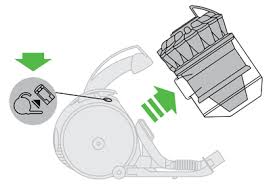
Luckily, the DC39 is designed well and it was not a problem to unhook its different compartments to find the source of the clog. For a small canister vacuum, the Dyson DC39's 0.65 gallon capacity isn't too shabby, either. Dyson improved the DC39, but we're not sure it's enough to warrant its price. The new technology that Dyson introduced with the Dyson DC39 sounds great and seemed to be very well thought out. The problem is that in some areas, the "Radial Root Cyclone" feature had a chance to work, and in others it didn't. The DC39 has weight (16 pounds), hose size, and portability working in its favor and it helps that you can turn the power brush on and off. It's certainly an upgrade from the DC26 in performance, but we still find it hard to recommend spending $500 on this vacuum. The only area where it was truly great was with hardwood, and there are plenty of vacuums that do well there. Think about it this way: for $500, you could buy this, or two Kenmore Progressive 21514s, a vacuum that outperformed the Dyson DC39 in every single category.